Disclosure: This post contains affiliate links, which means we may earn a commission if you purchase through our links at no extra cost to you.
I love pulling together DIY living room decor ideas that make a space feel personal without a lot of fuss. Small projects like painted accents, repurposed furniture, and textured textiles often bring the most character and let a living room tell its own story.
These DIY living room decor ideas work especially well in apartments and family rooms where versatility matters.
I usually pick projects that use scrap wood, thrifted finds, and basic craft supplies so the result feels warm, layered, and comfortably lived-in.
Stenciled accent wall for instant charm
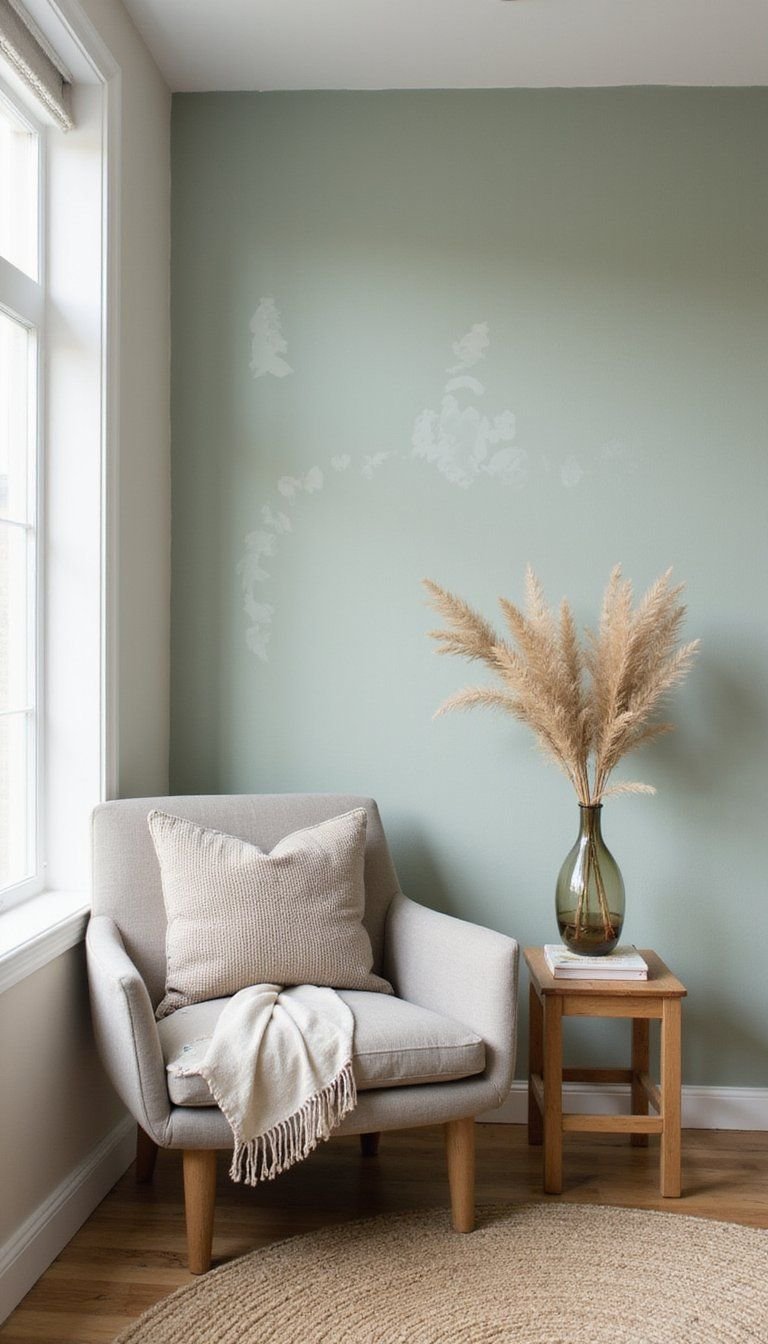
A stenciled accent wall is a friendly way to add pattern and color without replacing wallpaper or doing a full repaint. Using a removable stencil, latex paint, and a mini roller creates a crisp repeating motif — think soft geometric shapes in muted blues, warm terracotta, or sage green. Textures like matte paint paired with a linen sofa and a jute rug make the wall feel grounded. I once used a floral stencil behind a reading chair and loved how the small pattern made the corner feel like its own nook.
Styling Tips
- Test stencil and paint on cardboard first to avoid bleed marks.
- Keep surrounding decor neutral to let the pattern breathe.
- Add a slim shelf to display ceramics that pick up stencil colors.
Upcycled pallet coffee table with character

Turning pallets into a low coffee table gives a living room a rustic, lived-in feel. Sanding the wood, staining it in a warm walnut or painting it a muted charcoal creates a modern edge, while hairpin or mid-century legs lift the piece for a refined look. Top with a stack of books, a woven tray, and a small planter to balance the rough with softness. I remember finding pallets at a yard sale and finishing them with beeswax — they brightened the room while keeping things casual.
Styling Tips
- Seal the wood with clear varnish to protect from spills.
- Mix in soft textiles like a boucle pouf for contrast.
- Use baskets underneath for extra storage and texture.
How to build floating shelves that float

Floating shelves anchor display areas without taking up visual weight. Use plywood or reclaimed wood, concealed brackets, and wood filler for a seamless look. A mix of matte ceramics, framed photos, and greenery adds a collected vibe. Stick to a palette of warm wood tones, off-white pottery, and a few muted blues to keep the shelf calm and curated. I enjoy arranging small vignettes on these shelves—swapping items each season keeps the wall lively and personal without much effort.
Styling Tips
- Balance tall and low objects to create rhythm.
- Leave breathing room between frames to avoid cluttered look.
- Use museum putty to secure fragile decor on higher shelves.
Slipcover refresh for an older sofa
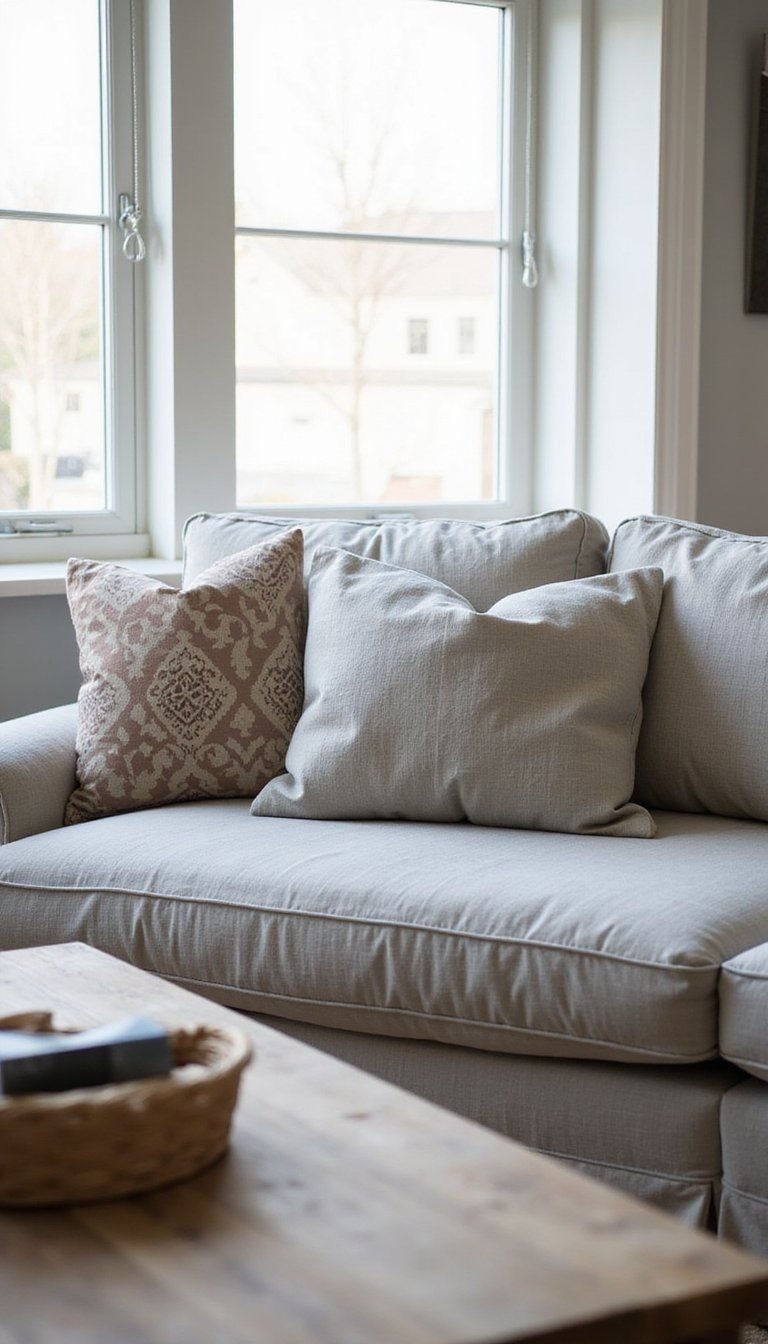
A tailored slipcover gives a tired sofa new life without reupholstering. Cotton duck or linen-look knit fabrics in warm beige, soft gray, or olive green lend texture and a relaxed silhouette. Add inner ties and elastic hems to keep edges neat, and include removable cushion covers for washing. I once made a slipcover for a hand-me-down couch; the room felt calmer and suddenly coordinated with the rug and curtains. The tactile change—soft folds and stitched seams—makes sitting feel cozier and more intentional.
Styling Tips
- Choose slightly heavier fabric to hide wear and keep shape.
- Add a tailored bolster or two for structure.
- Coordinate with a throw and a patterned cushion for interest.
Macramé plant hangers for cozy corners
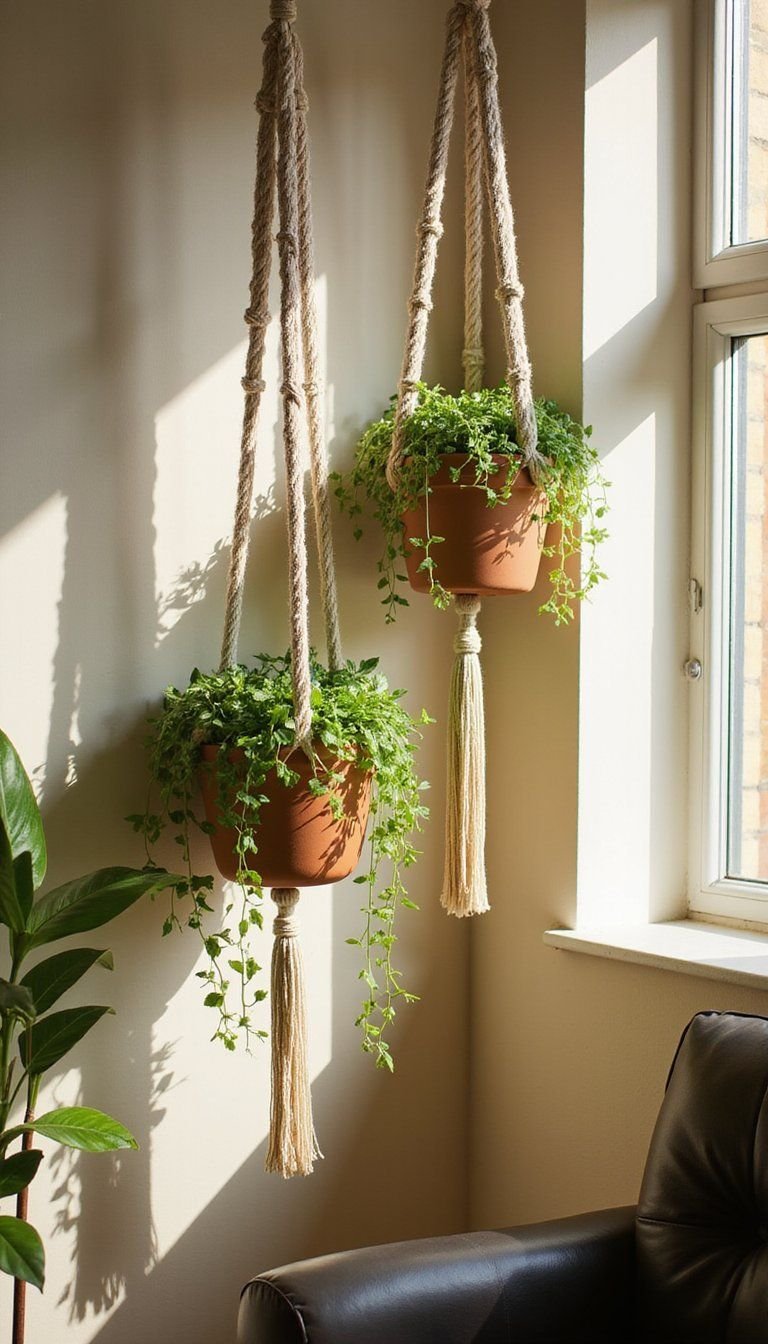
Macramé plant hangers add soft sculptural texture and lift greenery into unused vertical space. Use cotton cord and simple knots to make designs that range from airy to dense; natural cotton pairs nicely with terracotta and glazed ceramic pots. These hangers look wonderful in sunlit window corners or above side tables, and trailing pothos or string-of-pearls give movement. I taught myself a few knot patterns and now hang plants at staggered heights — it changed a blank corner into a small indoor garden with personality.
Styling Tips
- Vary pot heights for a layered, dynamic look.
- Pair macramé with woven baskets to extend the texture theme.
- Use ceiling hooks rated for plant weight and add a drip tray.
Painted canvas rug for bold color play
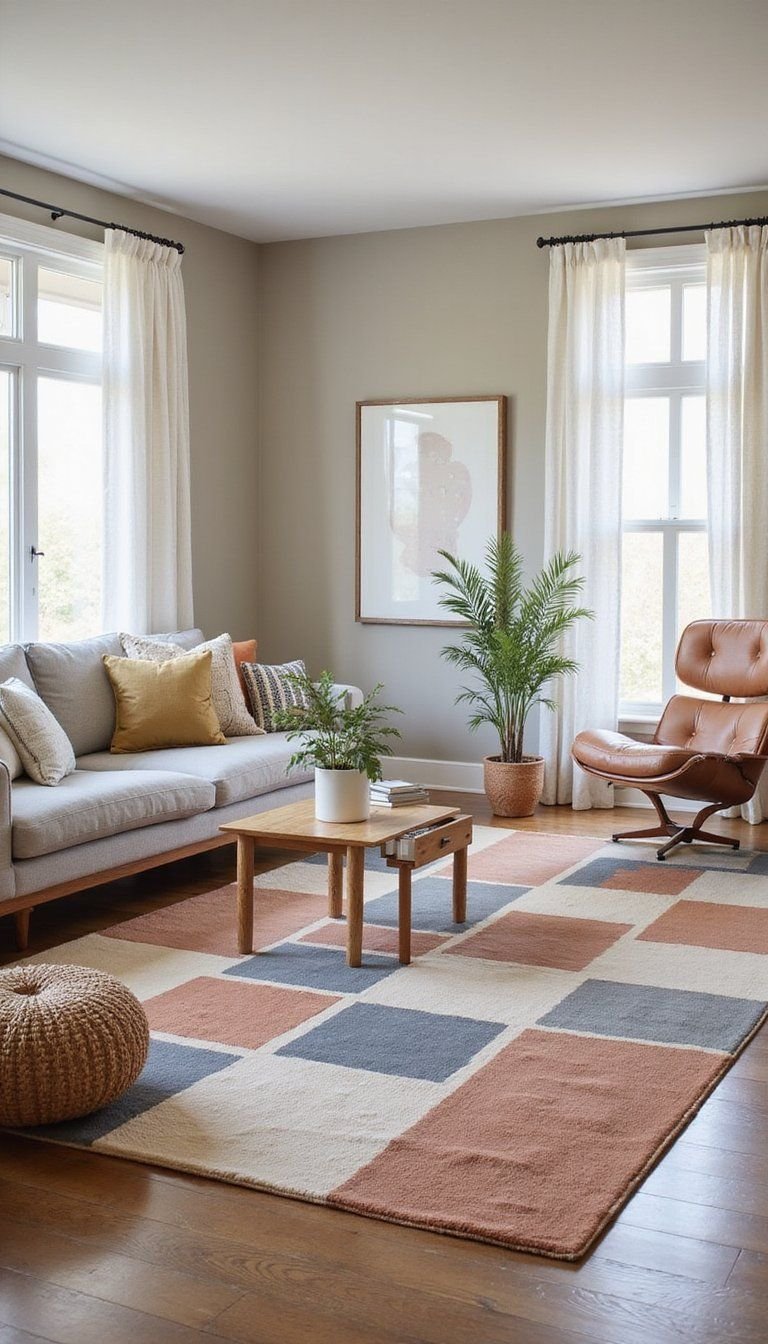
Creating a painted rug from drop cloth canvas allows custom scale and a fresh pattern without buying new textiles. Use outdoor latex paint in muted tones like dusty rose, slate, or mustard, and block off sections with painter’s tape for clean lines. The canvas texture reads like a woven rug and pairs well with wood floors and mid-century furniture. I painted a large geometric design for a rental living room and loved how the oversized pattern defined the seating area while echoing cushion colors.
Styling Tips
- Seal with a fabric medium or clear coat for durability.
- Anchor the rug with a low-profile coffee table.
- Layer a small woven mat near the sofa legs for extra texture.
Gallery wall with thrifted frames
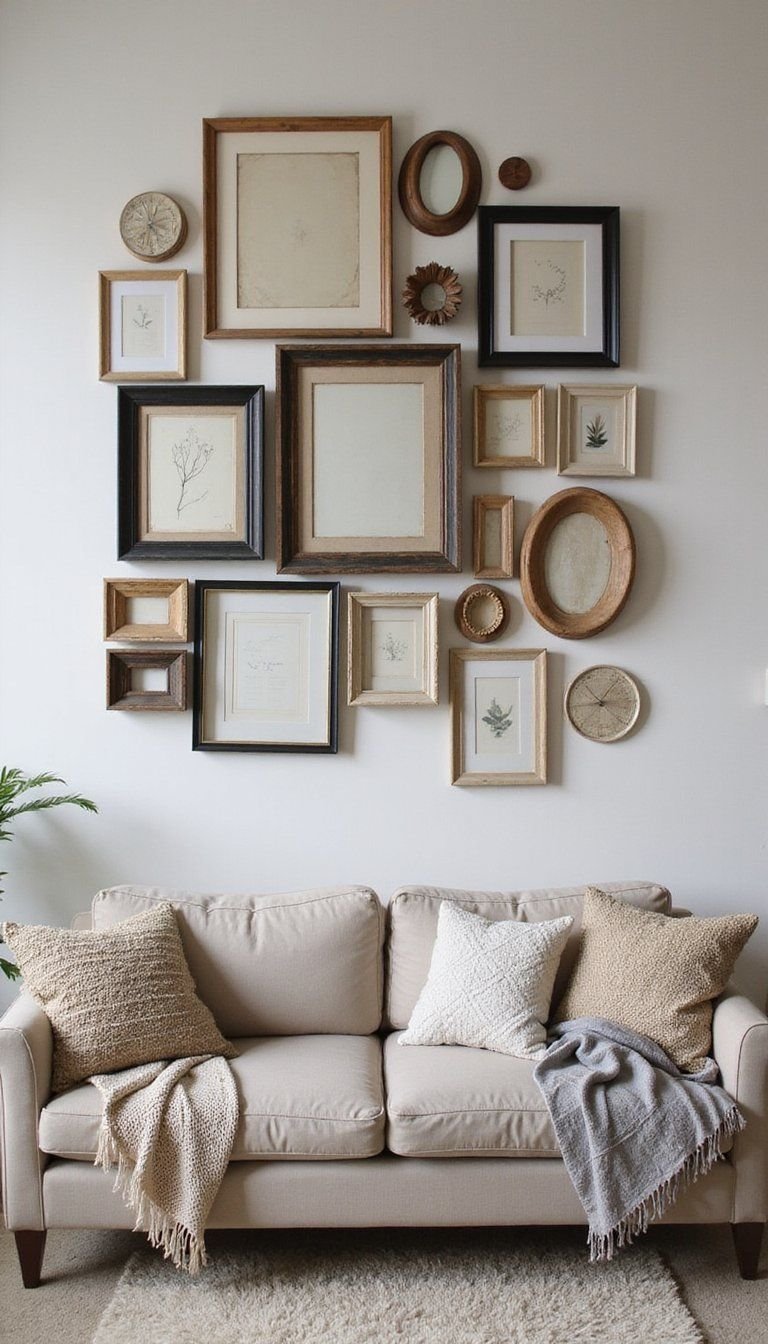
A gallery wall made from thrifted frames brings curated charm and a little history into a living room. Pick a limited palette of frame finishes — black, natural wood, and soft gold — so mismatched pieces feel intentional. Mix prints, family photos, and small textile swatches for tactile interest. I enjoy arranging frames on the floor first to test layouts before committing to nails; that hands-on moment feels like arranging a photo album across the wall. It’s a small craft project that adds personality to any seating area.
Styling Tips
- Create a central anchor frame and build around it symmetrically.
- Use uniform matting to harmonize different artwork sizes.
- Include one three-dimensional object like a shallow shelf or mask.
Peel-and-stick panels for renter-friendly flair
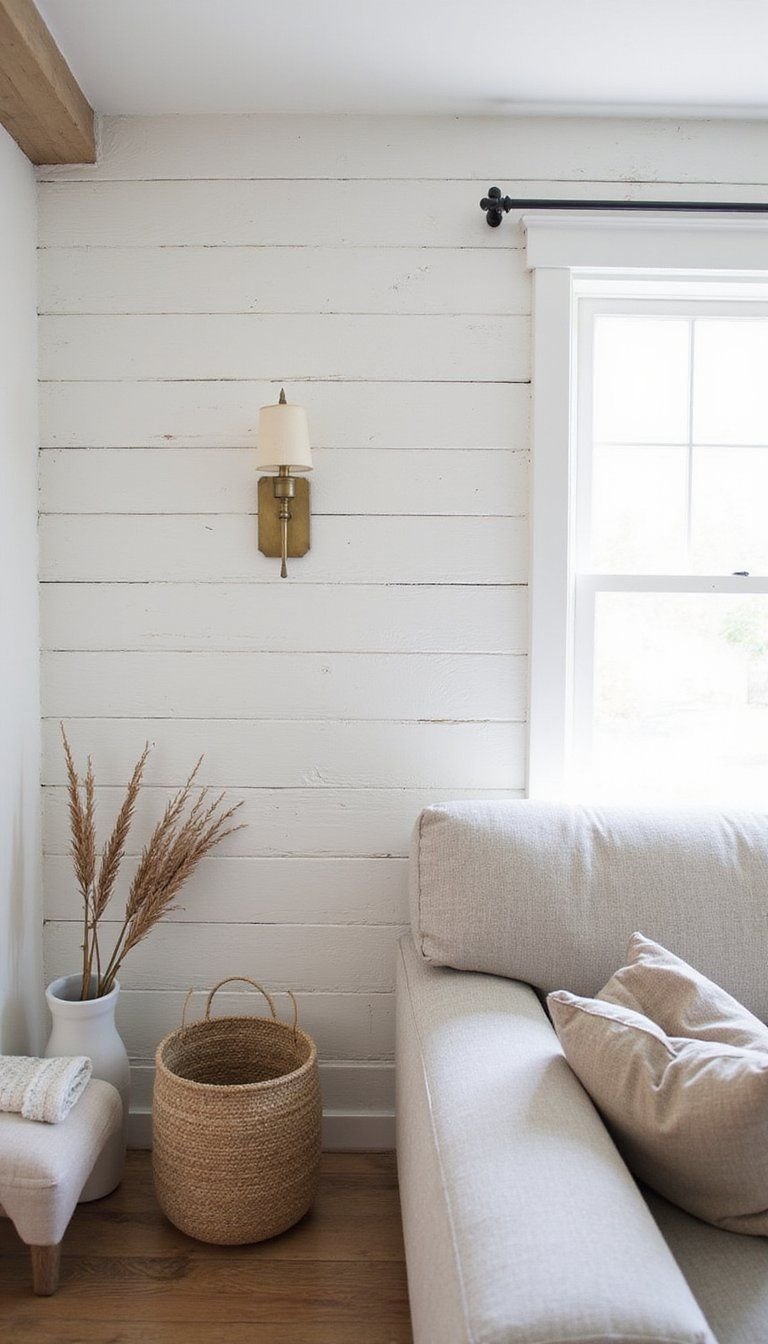
Peel-and-stick wall panels or planks add texture without permanent changes, which is ideal for rented spaces. Choose wood-look vinyl planks, faux shiplap, or embossed panels in soft oyster, warm taupe, or whitewashed pine. These panels pair well with brass sconces and a plush armchair to create a cozy reading nook. I once used horizontal planks behind a sofa to give a subtle coastal feel; after removal the landlord barely noticed. The tactile wall makes a big visual impact while staying flexible.
Styling Tips
- Clean the wall surface thoroughly before application for better adhesion.
- Complement with natural fibers like rattan baskets or linen curtains.
- Use removable hooks to hang art without damaging the panel finish.
String lights and canopy for relaxed evenings
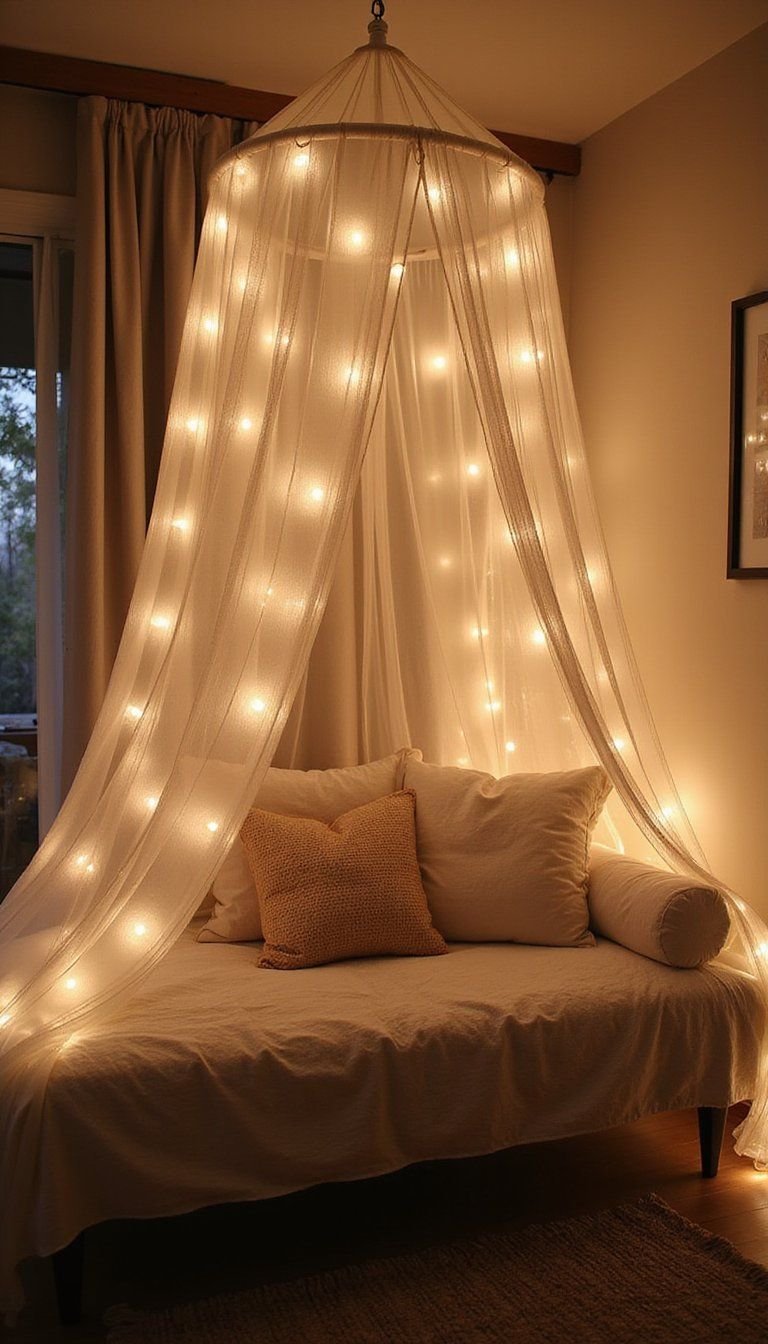
String lights and a soft canopy can turn a living room corner into a gentle, inviting retreat. Use warm LED bulbs, lightweight gauzy fabric, and a simple curtain rod or wall hooks to drape the canopy above a seating corner or daybed. Add plush floor cushions, a knitted throw, and a low table for drinks or books. I often set up a canopy for movie nights; the warm glow and layered textures make the space feel intimate and calm, like a portable nook within a room.
Styling Tips
- Choose warm-toned string lights for a cozier glow.
- Secure fabric well to avoid slipping or sagging.
- Incorporate a small area rug to anchor the canopy zone.
Mix-and-match throw pillow collection

Mixing pillows is an easy way to refresh a sofa’s look. Combine linen, velvet, and woven textures in a coherent palette — think soft neutrals with one accent color like navy or rust. Vary scale with a large lumbar, medium square, and two small textured cushions to keep the arrangement balanced. I often swap a single pillow seasonally to shift the mood without changing the whole room. This tactile play invites lounging and gives the sofa a layered, intentional appearance.
Styling Tips
- Use odd numbers for a relaxed, organic look.
- Place the largest pillow at the outer corner for structure.
- Pick one pattern and echo its color across solid cushions.
Painted fireplace mantel for seasonal swaps
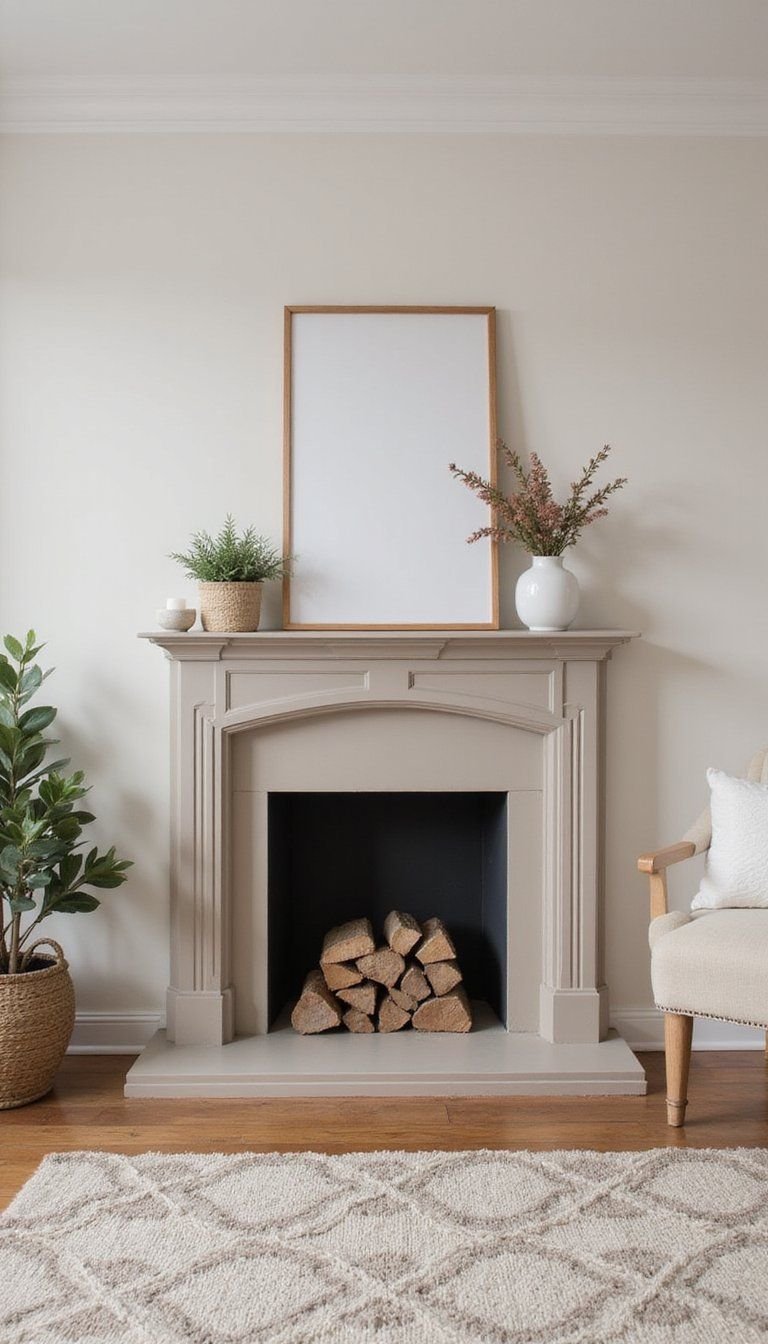
A fresh coat of paint on a fireplace mantel brightens the entire living room. Choose matte or eggshell finish in warm taupe, soft charcoal, or creamy off-white, then style with seasonal decor — small wreaths, candles, or framed prints. Pair the painted mantel with stone or brick textures for a layered effect. I enjoyed repainting an old mantel and finding that the new color made the artwork above pop; it felt like the room had been gently reorganized with a single action.
Styling Tips
- Protect the hearth with drop cloths and use heat-resistant paint if needed.
- Create balance with taller objects at one end and lower groupings at the other.
- Swap small accents seasonally to keep the mantel fresh.
Rope-wrapped side table for texture and warmth
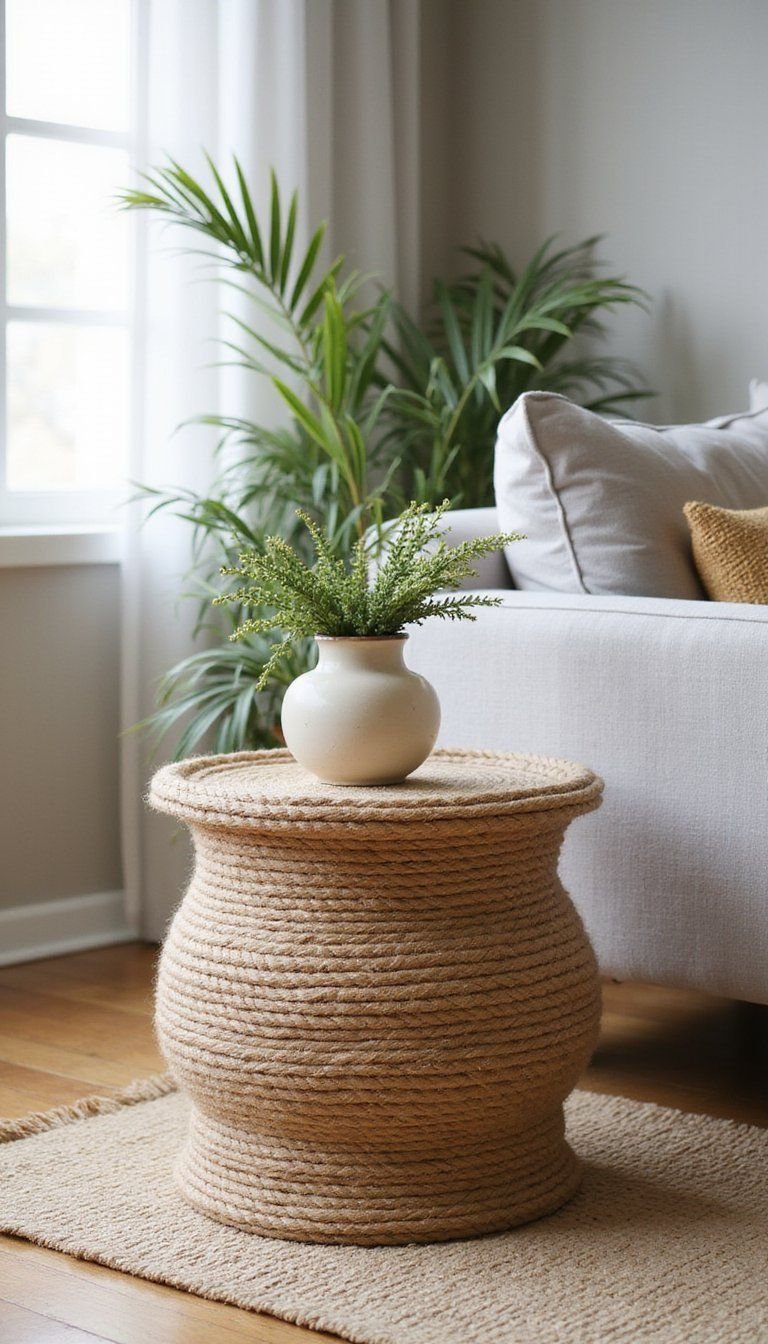
Wrapping a thrifted side table with natural rope creates earthy texture and a coastal vibe. Use jute or sisal cord, hot glue, and patience to cover the table base or tabletop edge. The tactile surface pairs well with ceramics, woven trays, and linen lamps. I wrapped a small round table for a balcony-facing living room and found it became an instant favorite for holding morning coffee and plants. The neutral rope blends with many palettes and adds subtle handcrafted appeal.
Styling Tips
- Secure the rope ends neatly on the underside to hide glue marks.
- Pair with a simple lamp to highlight the texture.
- Add a small plant to echo the natural material theme.
Repurposed ladder as a blanket display
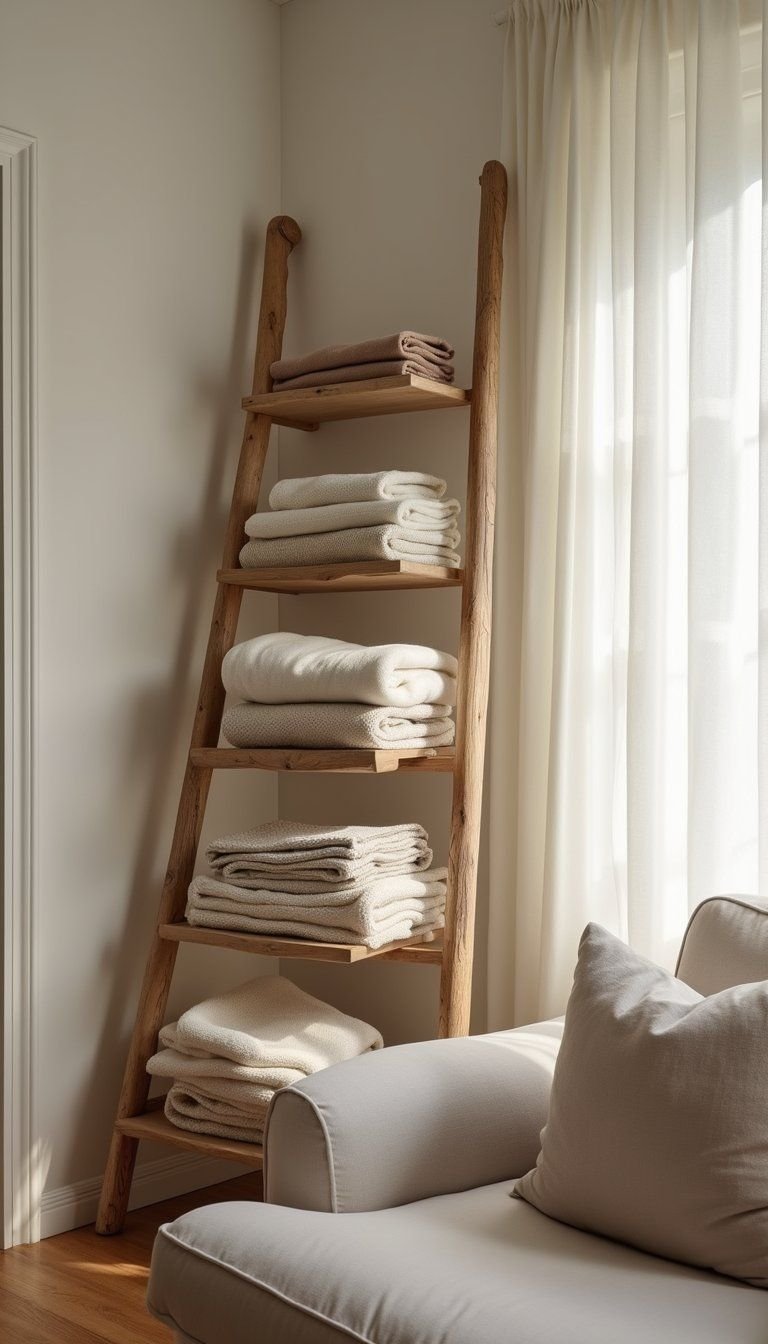
An old wood ladder makes an attractive blanket display and adds vertical interest. Sand and seal the ladder, then lean it against a wall near the sofa and drape throws or lightweight quilts over the rungs. The ladder brings wood grain and an architectural line into the living room, and fabrics in muted plaids, knits, or woven stripes add a homey touch. I picked a slim ladder at a flea market and it instantly organized my seasonal throws while feeling like casual decor.
Styling Tips
- Anchor the ladder with a small wall hook to prevent tipping.
- Fold blankets neatly to show patterns and texture.
- Mix patterned throws with solids for visual balance.
DIY terrazzo plant pots from concrete
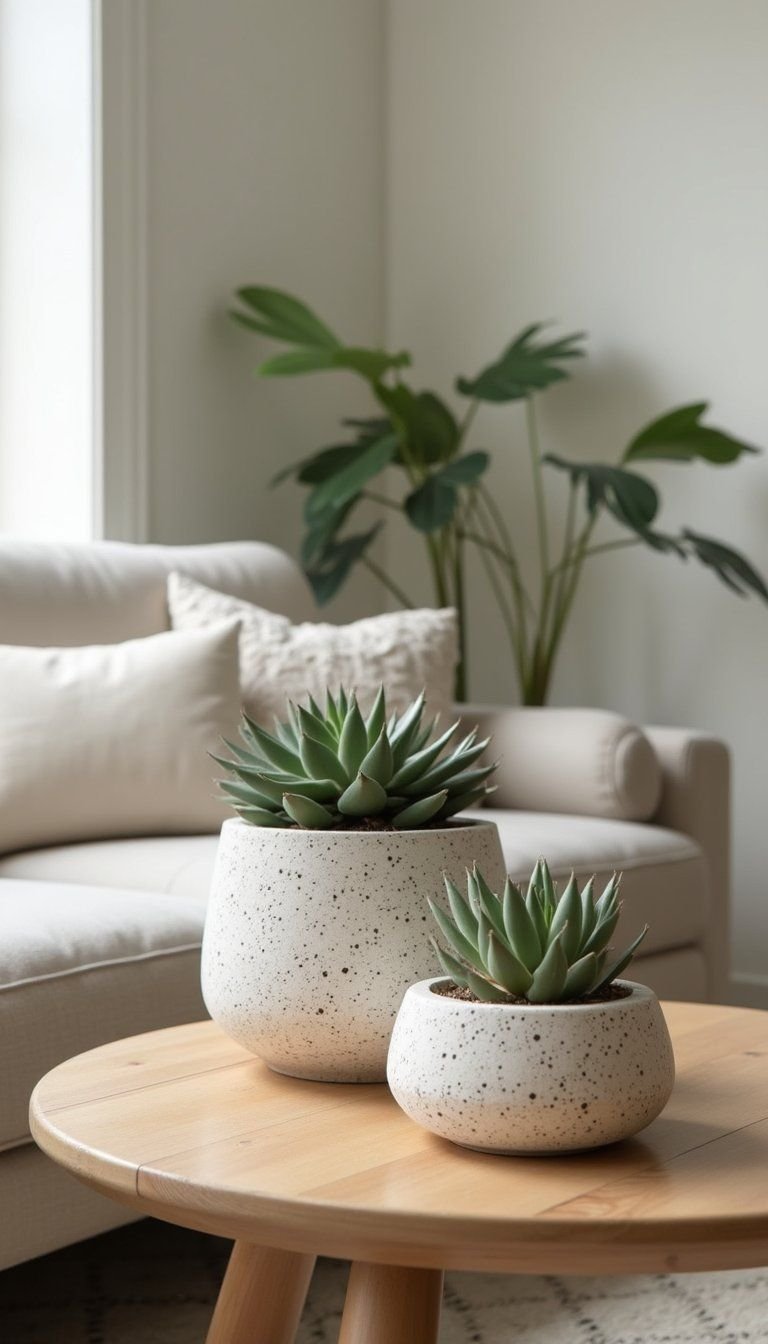
Mini terrazzo pots made from concrete and colorful chips are great for herbs or succulents on a coffee table or windowsill. Mix fine concrete, pour into silicone molds, and press in small recycled glass or tile pieces before curing. The speckled surface reads modern and pairs with brass planters or matte glazed ceramics. I made a batch for a friend’s housewarming and loved seeing how the tiny color flecks picked up hues from cushions and rugs, tying small details across the room.
Styling Tips
- Seal the pots inside to prevent moisture from staining the room.
- Group three pots of varying heights for a mini installation.
- Use low-water plants like succulents to reduce maintenance.
Mix curtain panels for layered light control
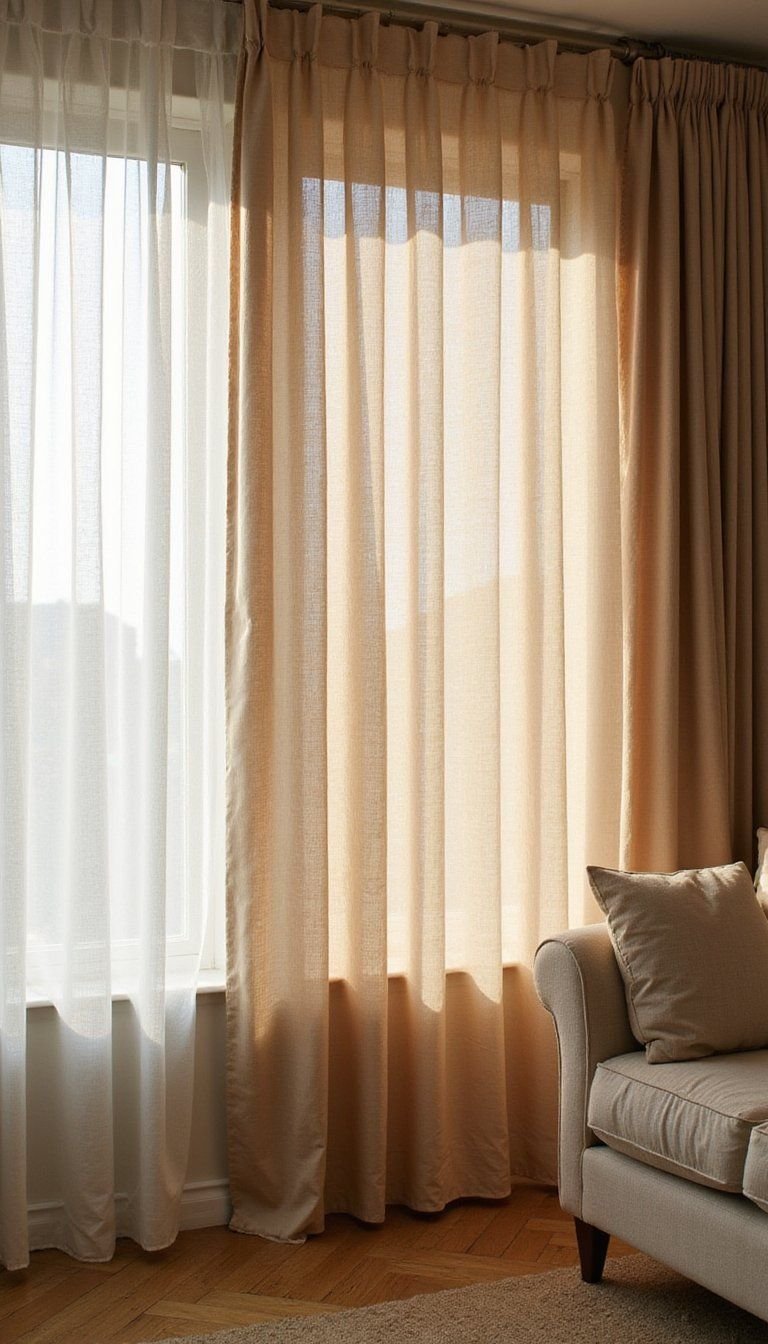
Layering curtain panels in different weights and colors gives control over daylight while adding depth. Pair a sheer linen panel with a heavier cotton panel in complementary tones — soft ivory with muted clay or dove gray with sage. This approach allows morning light to filter softly while offering privacy when needed. I often combine a patterned panel with a solid to keep things lively without overwhelming the window. The layered textiles add vertical texture and help frame seating areas in larger living rooms.
Styling Tips
- Hang rods high and wide to make windows feel larger.
- Choose panels that puddle slightly for a relaxed look or just kiss the floor for neatness.
- Coordinate curtain trim with cushion colors for cohesion.
Vintage mirror makeover for added light

A thrifted mirror can be refreshed with a painted frame or gold leaf accents to reflect more light and open the room. Sand lightly, prime, and paint in a soft metallic or chalk finish to update the look. Positioning the mirror across from a window amplifies daylight and makes small living rooms feel airier. I transformed a scuffed oval mirror with a thin coat of muted brass paint and suddenly the entry into the living room felt brighter and more intentional.
Styling Tips
- Use a mirror as the focal point above a console or mantel.
- Pair with a small cluster of wall hooks to create a practical vignette.
- Keep surrounding decor minimal to let reflections work their magic.
Sew a floor pouf from leftover fabric

Hand-sewing or machine-sewing a floor pouf from leftover upholstery fabric creates a cozy, movable seat. Use heavyweight fabric, sturdy thread, and a dense filler like foam scraps or upholstery batting for resilience. Choose colorways that echo the room’s palette — oatmeal, slate, or mustard for subtle accents. I stitched a round pouf from an old curtain and it instantly became the favorite spot for kids and guests. The pouf’s tactile surface adds comfort and a casual, layered element to the seating arrangement.
Styling Tips
- Top-stitch seams for durability and a finished look.
- Place near a low table to function as extra seating or a footrest.
- Mix one patterned pouf with solid cushions for balance.
Crate shelving for a casual media center
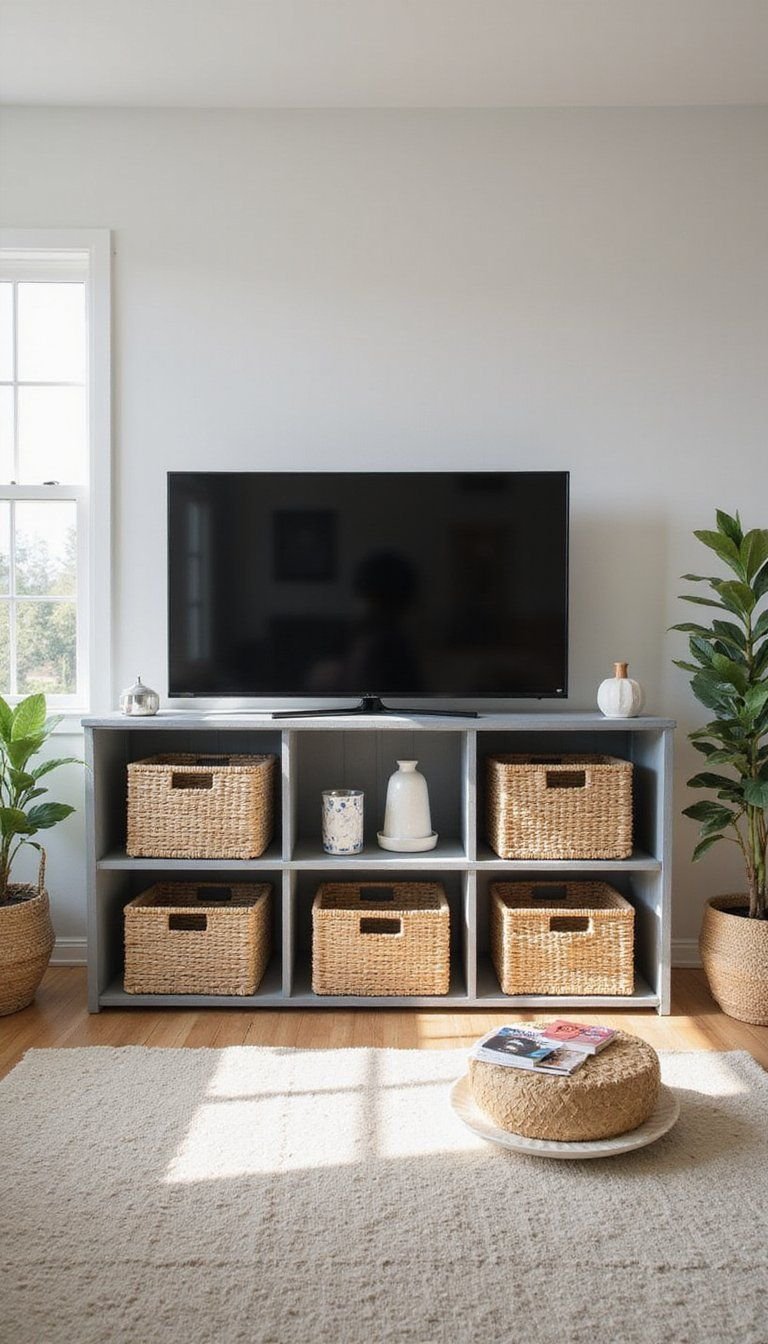
Stacking wooden crates creates a flexible, casual media center or display shelf. Sand and paint crates in a unified color or leave them raw for rustic texture; add caster wheels underneath for mobility. The cubes hold books, electronics, baskets, and plants, and the open design keeps the room airy. I used painted crates as a TV stand in a small living room, then updated the color seasonally to shift the mood. The solution felt practical and slightly playful, with a strong DIY personality.
Styling Tips
- Add baskets within some crates to hide cords and clutter.
- Balance heavier items across the base for stability.
- Use matching hardware like black casters for a cohesive look.
Give furniture new legs for instant lift
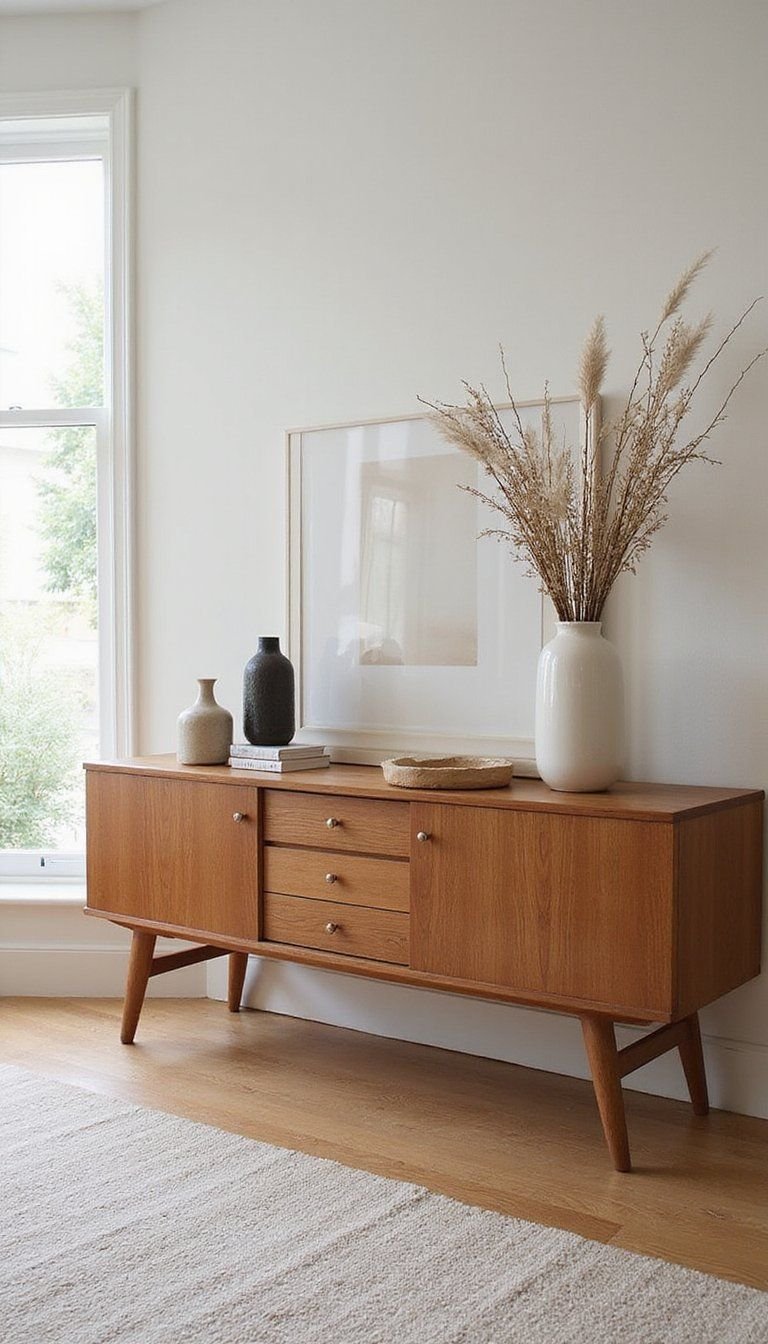
Swapping out old furniture legs for new ones is a small upgrade with big visual returns. Mid-century tapered legs, industrial metal hairpin legs, or raw wood bun feet can change a sofa, sideboard, or coffee table’s character. Choose finishes that complement other wood tones and metal accents in the room. I changed the legs on a heavy console and the piece felt lighter and more in scale with the seating area. The new rise also makes vacuuming and cleaning easier, which feels surprisingly satisfying.
Styling Tips
- Measure fit and load capacity before purchasing replacement legs.
- Match screw sizes or use adapter plates for secure installation.
- Consider adjustable feet for uneven floors.
Chalkboard paint wall for changing displays
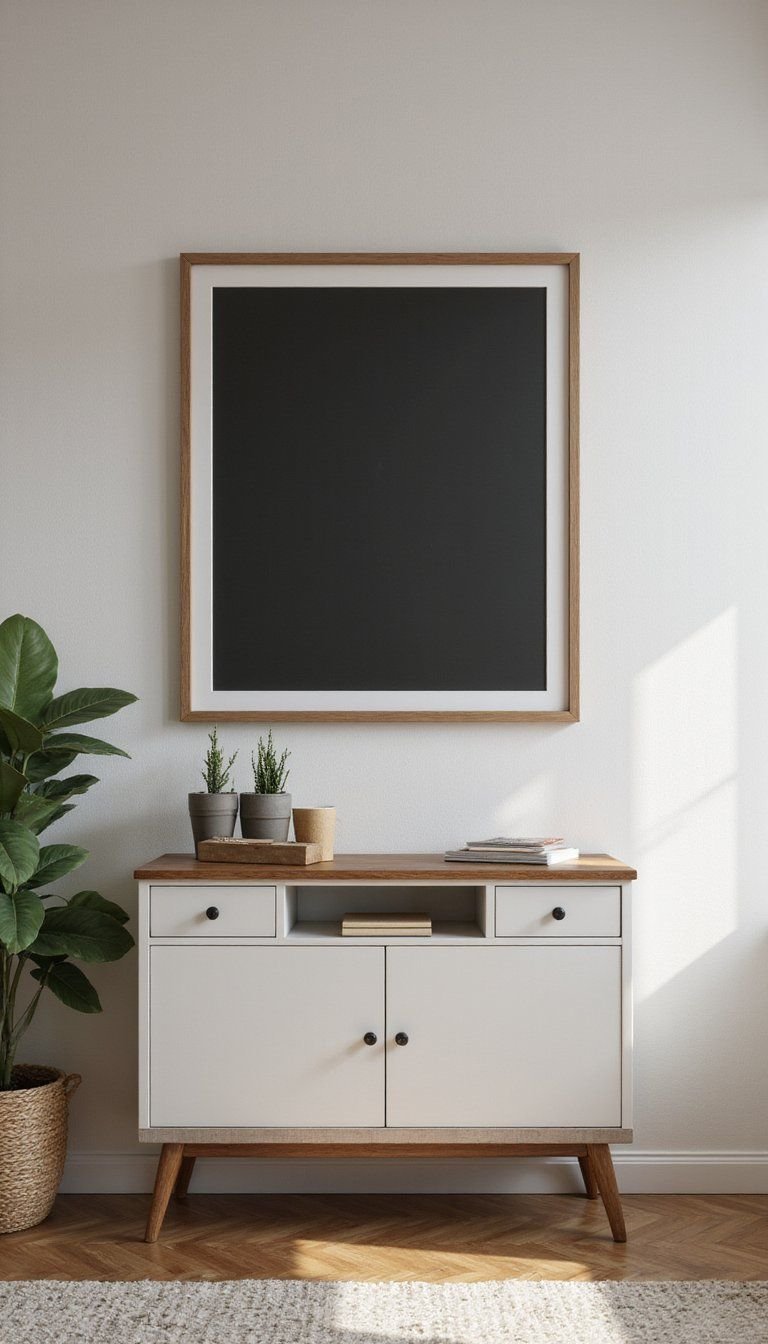
Painting a small section of wall with chalkboard paint creates a playful, functional canvas for notes, quotes, or seasonal sketches. Use a smooth finish and keep chalk in soft white or pastel tones for a refined look. This idea works well in a living room corner where schedules or rotating artwork can live. I taped off a framed rectangle above a low console and enjoyed swapping seasonal doodles and handwritten menus during gatherings — it felt like a casual, personal gallery that changes with the day.
Styling Tips
- Frame the chalkboard with molding to keep it feeling tidy.
- Use liquid chalk markers for cleaner lines and easier wiping.
- Keep a small shelf for chalk and an eraser nearby.
DIY pouf cover from an old sweater
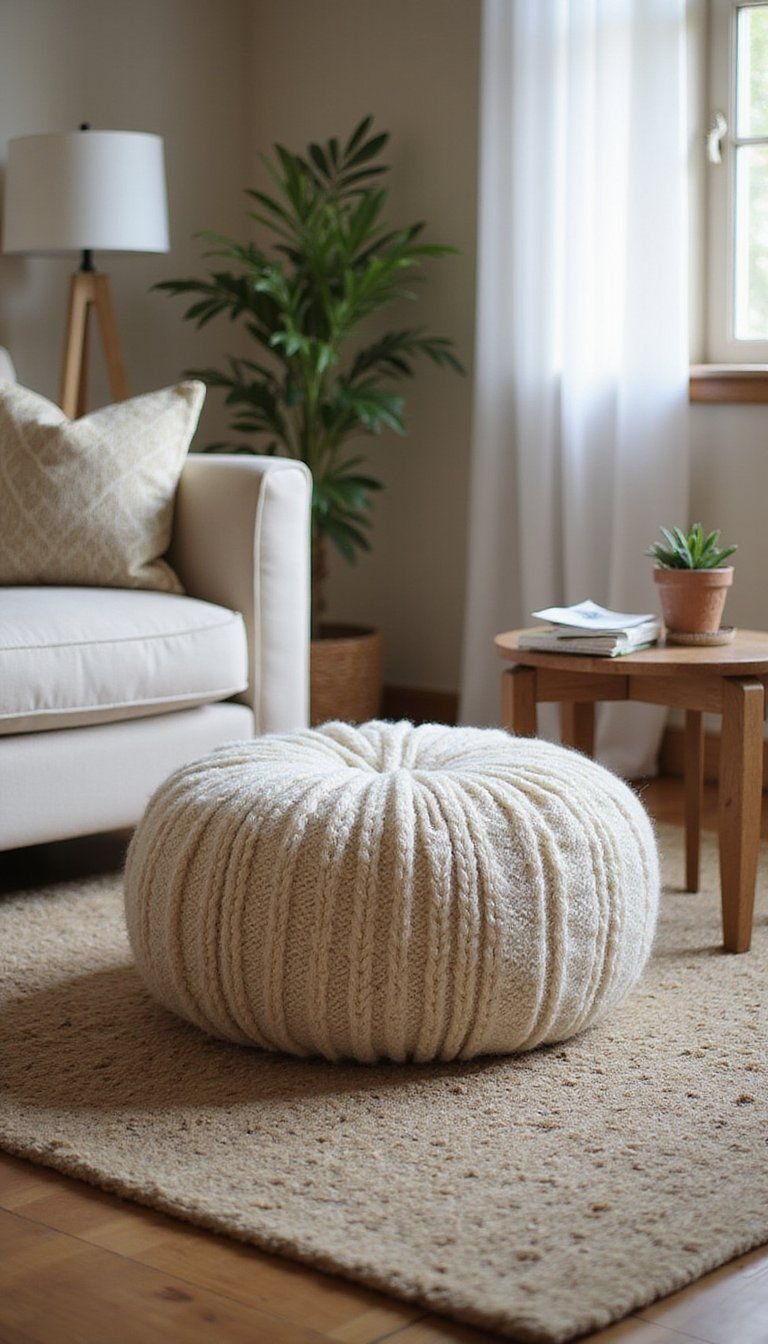
Turning an oversized sweater into a pouf cover adds knit texture and a cozy touch. Cut and stitch the sweater into a cylindrical cover, stuff with old pillows or foam, and secure with a zipper or hidden closure. The chunky knit pairs beautifully with wooden coffee tables and leather seating, bringing warmth and tactile contrast. I made a pouf from a thrifted wool jumper and enjoyed how its knit stitches echoed knitted throws on the sofa — it felt handmade and personal in a soft way.
Styling Tips
- Use an inner liner to protect the knit from spills.
- Match the knit color with a small throw for a unified look.
- Keep stuffing firm for seating or softer for footrest use.